

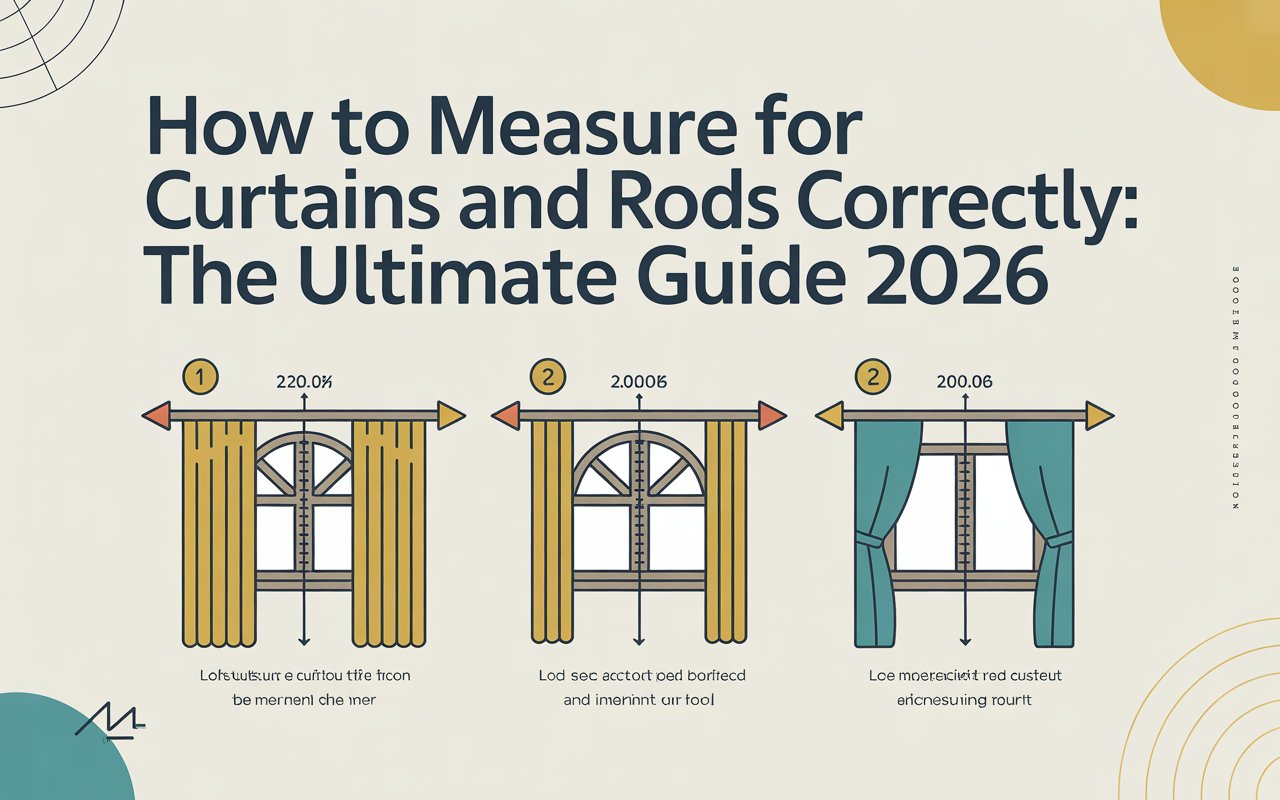
Measuring curtains may seem simple at first, yet small mistakes can lead to poor coverage, uneven hems, or rods placed too low or too high. That’s why learning How to Measure for Curtains And Rods the right way is so important before you buy or install anything. When measurements are accurate, curtains frame the window beautifully, block unwanted light, and instantly make a room feel balanced and finished.
This guide is designed to help you measure with confidence, even if you’ve never done it before. You’ll learn how to measure window width and height, choose the correct rod placement, and calculate curtain width and length based on fullness and style. From standard windows to sliding doors and bay windows, this article explains every step in clear, easy English so you can avoid costly mistakes and achieve a polished, professional look in your home.
Equipment List: What You’ll Need
Before you begin, gather the tools below to ensure accurate measurements:
- Steel measuring tape for precision
- Pencil and notepad to record dimensions
- Step ladder for high windows
- Level to keep rods straight
- Optional: Calculator for calculating curtain fullness ratio
Having these tools ready will help you measure for curtain tracks and curtain rods efficiently, avoiding mistakes and wasted fabric.
How to Measure Your Window for Curtains (Step-by-Step)
Step 1: Decide Rod Mount Type
First, determine whether to choose wall mounted or ceiling mounted rod. Wall mounts are standard and easier to install, while ceiling mounts create drama for tall windows or sliding doors. Your choice affects curtain length depends on rod height, so decide this before measuring.
Step 2: Measure Window Width and Height
Use your tape measure for accuracy. Measure window width at the top, middle, and bottom, and record the largest number. Then measure from the rod location to the floor or sill for sill length curtains, floor length curtains, or puddle length curtains. Always include stack back allowance so panels slide without blocking sunlight.
Pro Tip: If your floors are uneven (common in older American homes), measure the height at both left and right sides. Use the shortest measurement for a “hover” look, or the longest for a “puddle” look to hide the gap.
Step 3: Calculate Curtain Width Based on Fullness
For standard fullness, multiply window width by 1.5. For a fuller appearance, multiply by 2, and for luxury pleats, multiply by 2.5. This ensures your curtain panel width and curtain fullness ratio are accurate. Adjust calculations for curtain header types like grommet, rod pocket, or pinch pleat.
Step 4: Extend Curtain Rod Beyond Window Frame
Add 4–6 inches on each side for full coverage and to avoid light gaps on sides. Mark bracket placement accurately to support heavy panels. This step ensures your curtain rod width measurement and stack back allowance are correct.
Step 5: Measure from Rod to Floor
Decide the curtain style: floor length curtains, sill length curtains, or puddle length curtains. Measure from the rod to the endpoint. This guarantees your measure from rod to floor is precise. Adjust for sliding door curtain measurements or uneven floors to ensure smooth operation.
Responsive Quick Table: Curtain Width & Fullness Ratios
| Window Width | Standard Fullness | Full Look | Luxury Pleats | Notes |
|---|---|---|---|---|
| 36 inches | 54 inches | 72 inches | 90 inches | Adjust stack back allowance |
| 48 inches | 72 inches | 96 inches | 120 inches | Works for rod pocket curtains |
| 60 inches | 90 inches | 120 inches | 150 inches | Ideal for pinch pleat curtains |
Pro Tip: Always round up when calculating panel width. This prevents light gaps on sides and ensures a luxurious appearance.
How High to Hang Curtain Rods for the Best Look
Step 6: Decide Rod Height
To achieve a polished look, decide how high to hang curtain rods about 4–6 inches above the window frame. For tall rooms or floor-to-ceiling windows, mount near the ceiling for drama. This step affects curtain length depends on rod height, ensuring floor length curtains or puddle length curtains hang perfectly.
Step 7: Mark Bracket Placement Accurately
After selecting the rod height, mark the brackets carefully on both sides. Proper rod placement height prevents sagging and ensures stability for heavy panels. For wide windows, use extra brackets. Correct placement also accounts for stack back allowance, allowing the curtains to open fully without blocking light.
Pro Tip: For heavy curtains, check that the rod is level with a level tool. Uneven rods can cause fabric to sag and make curtain panel width look uneven.
Inside Mount vs Outside Mount Curtain Measurements
Step 8: Measure for Inside Mount
For inside mount vs outside mount curtains, measure the window opening width and height for an inside mount, subtracting a small clearance for a snug fit. This ensures the curtain fits without touching the frame. Adjust for curtain header types and panel style like rod pocket curtains or grommet curtains.
Step 9: Measure for Outside Mount
For outside mounts, add extra width and height beyond the frame. This prevents light gaps on sides and allows full coverage. Include stack back allowance for smooth operation. Adjust measurements based on style, whether pinch pleat curtains or rod pocket curtains, to ensure your curtain rod width measurement is accurate.
Pro Tip: Outside mounts make windows appear larger. Always measure window width and height precisely to avoid gaps and misalignment.
Special Cases: Sliding Doors, Bay Windows & Curtain Tracks
Step 10: Sliding Doors
Sliding doors require special attention. Measure the full width and height for panels that slide easily. Use sliding door curtain measurements and extend the rod beyond the frame to prevent light gaps on sides. Make sure measure from rod to floor allows clearance at the bottom for smooth operation.
Step 11: Bay Windows
Bay windows need measurements for each section individually. Bay window curtain measurements must account for curves and angles. Use measuring for curtain tracks or rails if a flexible system is needed. Proper measurement ensures panels stack neatly and provide full coverage.
Step 12: Curtain Tracks & Rails
If using tracks instead of rods, measure carefully to allow smooth panel movement. Measuring for curtain rails and measuring for curtain tracks requires adding extra width for overlaps. Check curtain fullness ratio and curtain panel width to ensure panels stack neatly when open.
Pro Tip: For bay windows or sliding doors, consider a professional-grade track system for smooth operation and precise fit.
Final Curtain and Rod Measurement Checklist Before Buying
Before purchasing, review all dimensions carefully. Double-check window width and height, rod type, curtain panel width, and curtain fullness ratio. Confirm stack back allowance and the curtain header types you plan to use. Make sure floor length curtains or sill length curtains will reach the correct endpoint.
Check rod placement, bracket spacing, and mounting type. Verify the rod extends enough to extend curtain rod beyond window frame and that curtains will measure from rod to floor accurately. Taking the time for this checklist ensures your measure curtains correctly, saving time, money, and stress while achieving a professional, polished look.
Responsive Table: Curtain Rod Placement & Curtain Lengths
| Window Type | Rod Placement Height | Curtain Type | Recommended Fullness | Notes |
|---|---|---|---|---|
| Standard Window | 4–6 inches above frame | Floor Length | 1.5x–2x | Prevent light gaps on sides |
| Sliding Door | Ceiling Mounted | Floor Length | 2x | Ensure smooth panel glide |
| Bay Window | Custom per panel | Floor/Sill Length | 1.5x | Requires curve rod or track |
| Kitchen Window | At sill height | Sill Length | 1.5x | Practical and tidy |
| Living Room | 6 inches above frame | Puddle Length | 2–2.5x | Luxurious look |
FAQ (How To Measure For Curtains And Rods)
Q1: How much wider should a rod be than the window?
A: Add 4–6 inches on each side for full coverage and proper stack back allowance.
Q2: Do you measure the window frame or just the glass?
A: Measure the frame for outside mount and the glass/opening for inside mount to ensure accuracy.
Q3: How do I calculate curtain width based on fullness?
A: Multiply window width by 1.5 or 2 for standard or full look, and 2.5 for luxury pleats to determine curtain panel width.
Q4: Should curtains touch the floor?
A: Depends on style. Floor length curtains can hover slightly above the floor, while puddle length curtains create a dramatic effect. Always measure from rod to floor before cutting.

Wellcom to BudgetDiyDen! I’m Faizan Malik, an AI Powerd SEO , and Content writer withfour years of experience.
At BudgetDiyDen, where We shares simple, affordable home renovation and décor ideas. We focuses on practical tips, clever DIYs, and budget-friendly solutions that help homeowners transform small spaces with confidence.